
Technology is advancing rapidly, and the infrastructure needed to support it is expanding right alongside it. Data centers are a major part of this growth, but their operations require more than just electricity. Water plays an important role in the operation of many of these facilities. Here’s a closer look at what we know about data centers and the effect on our water supply.
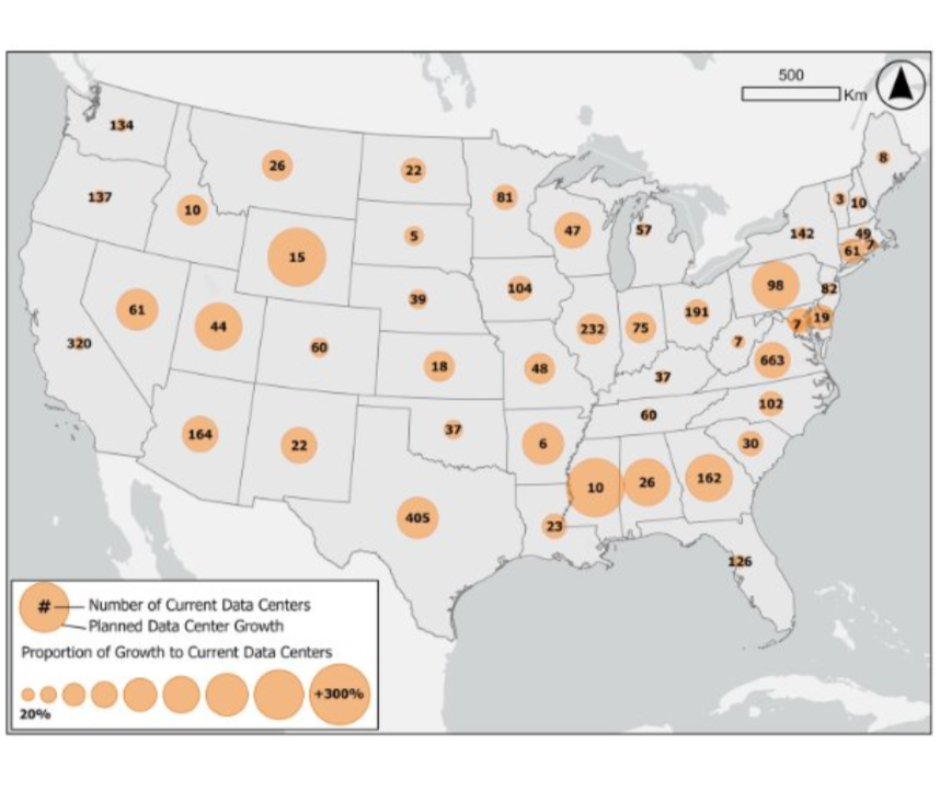
Texas Data Centers
Texas has seen significant growth in data center development, with more facilities operating, under construction, or planned across the state.
As of September 2025
- Dallas/Fort Worth area -197
- Houston – 48
- San Antonio – 60
- Austin – 53
- West Texas region – 59
Challenges in Measuring Water Use
Accurately estimating data center water consumption can be challenging because water-use information is not always publicly available or shared with the organizations responsible for water supply planning. Several factors contribute to this lack of information:
Limited transparency: Data center developers do not always disclose projected or actual water consumption.
Inconsistent reporting: Requirements for reporting and sharing water-use data vary between cities and facilities.
Communication gaps: City departments responsible for approving development may not always coordinate with municipal water departments to evaluate potential water demand.
Limited data availability: Regional water providers may not have access to the information needed to accurately estimate current and future water demand.
As a result, available water-use estimates may not reflect the full extent of data center demand, making long-term water supply planning more difficult.
Types of Water Use
Data centers use water both directly at their facilities and indirectly through the electricity needed to power their operations. Understanding the difference between these two types of water use provides a more complete picture of their overall water footprint.
Direct Water Use
Water used at the facility itself.
Primarily used for cooling servers and other equipment.
The amount used depends largely on the cooling technology.
May come from a municipal water supply or another local source.
Indirect Water Use
Water consumed during the production of electricity needed to operate the facility.
Primarily associated with cooling at power generation facilities.
Depends on the facility’s electricity demand and the type of power generation supplying it.
May occur far away from the data center itself.
Estimated Data Center Indirect Water Use in the DFW Area (2025): Approximately 4 billion gallons.
Cooling Technology Makes a Difference
The amount of water a data center uses can vary significantly depending on its cooling technology. Different cooling systems have different water requirements, making the choice of technology an important factor in determining a facility’s overall water consumption.
Photo provided by www.providentdatacenters.net
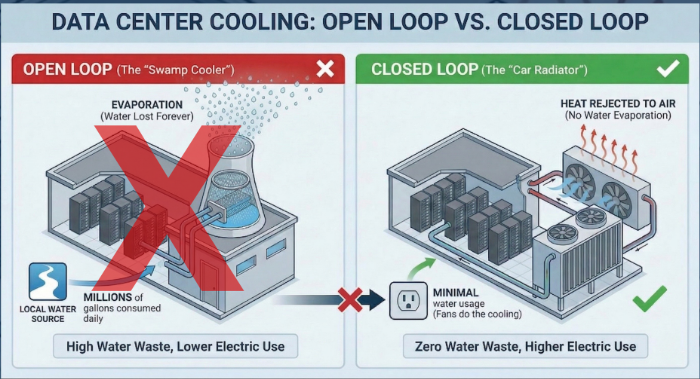
Open-Loop Cooling Systems
Use water to absorb heat from equipment.
Water is discharged or transferred out of the cooling process rather than continuously recirculated.
Can require a continuous supply of water.
May result in significantly higher water consumption.
Closed-Loop Cooling Systems
Circulate water or another cooling fluid through a contained system.
Allow the cooling fluid to be reused.
Generally require less water than open-loop systems.
May still require additional water to replace evaporation and other losses.
Who Makes Development Decisions?
Understanding the responsibilities of local and regional organizations is important when discussing data center development.
Cities: Approve or deny local development projects and establish applicable development requirements.
Municipal water departments: Manage local water supplies and infrastructure and may evaluate the water demands of proposed developments.
Regional water providers: Supply wholesale water to cities and other customers and plan for long-term regional water needs.
Data center developers: Determine facility design, cooling technology, and operational water requirements.
TRWD's Role
Understanding TRWD’s role in data center development is important when considering how these facilities may affect regional water supplies.
- Provides wholesale water supplies to cities and other customers.
- Works with customers on long-term water supply planning.
- Does not approve or deny data center development.
- Does not control how individual cities use the water they receive.
Residents with concerns about proposed data center developments should contact their local city officials and participate in local planning and development discussions.
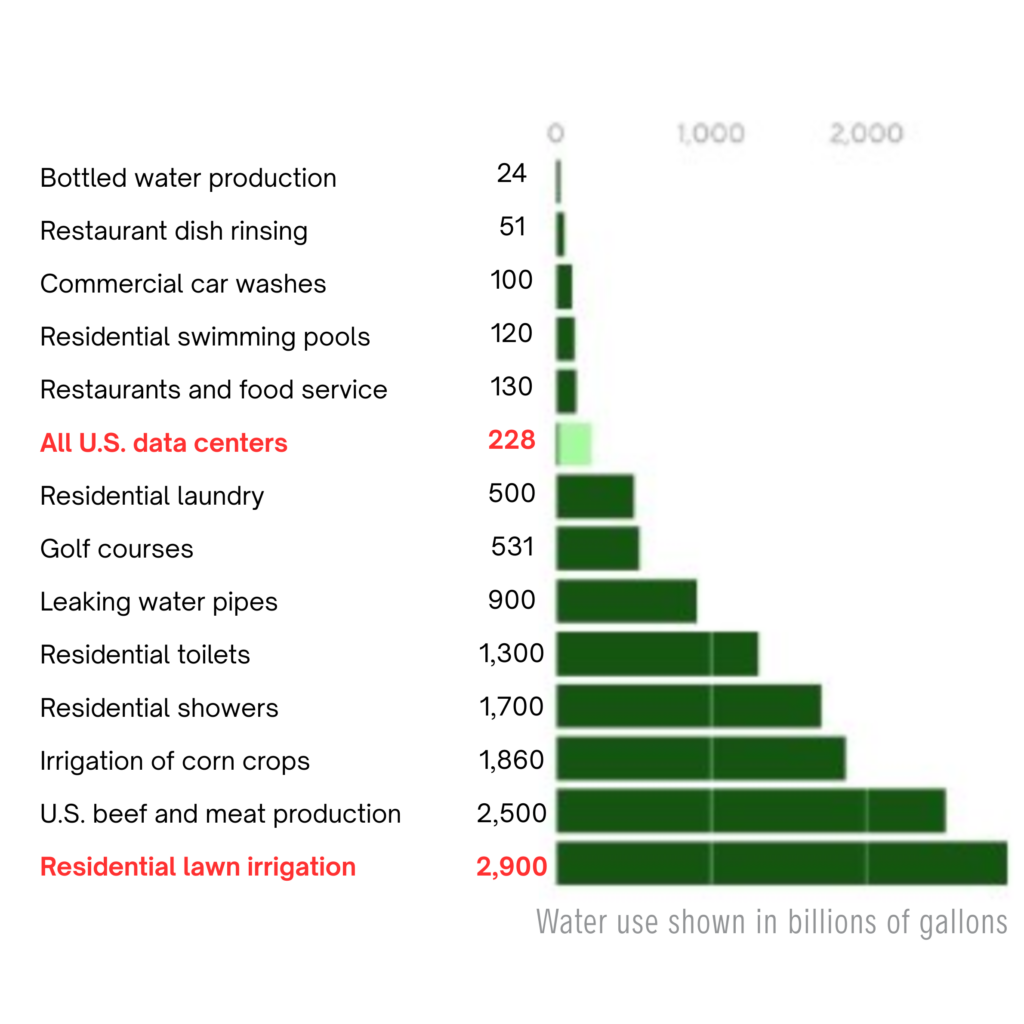
Residential Water Use
Data centers are one of many industries with significant water demands. Other commercial and even residential use substantial amounts of water.
- Residential lawn irrigation uses more than 12x the amount of water that data centers use!
When comparing total annual use, residential lawn irrigation can account for more water use than all U.S. data centers combined.
It’s also worth considering how the water is being used. Data centers support digital infrastructure and services, while residential lawn irrigation is primarily used to maintain outdoor landscapes and aesthetics.
Planning for the Future
As data center development continues, several factors will be important for managing future water demand.
Transparency: Making projected and actual water consumption information more accessible.
Communication: Improving coordination between developers, city departments, and water providers.
Planning: Evaluating whether sufficient water supplies are available to meet future demand.
Efficiency: Encouraging the use of water-efficient cooling technologies.
Long-term demand: Accounting for both direct and indirect water consumption when evaluating the industry’s overall water footprint.
Reliable data and responsible water planning will be essential as data centers continue to expand. Understanding how these facilities use water is an important step toward balancing technological growth with the long-term sustainability of our water resources.
Resources
Data Center FAQs – Tarrant Regional Water District
Thirsty Data Water Use and the Projected Data Center Boom in Texas.pdf
AWE Releases Data Center Primer for Water Service Providers – Alliance for Water Efficiency
Cooling Water Efficiency Opportunities for Federal Data Centers | Department of Energy
ENERGY STAR Certified Data Centers | ENERGY STAR
Water Requirements for Data Centers – University of Texas at Austin