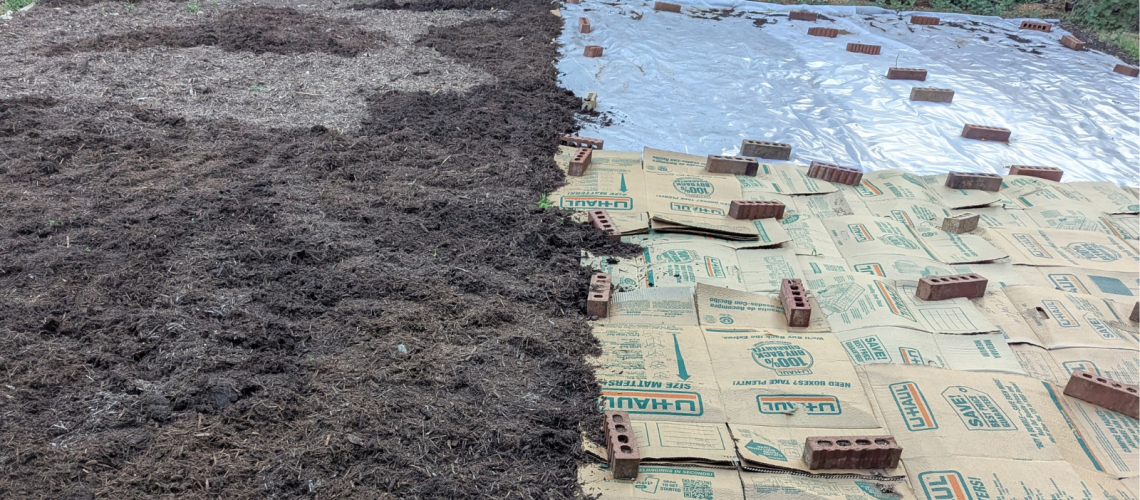
We put several grass-removal methods to the test to see which ones worked best and what the soil looked like afterward.
From July 1 through September 25, we tested five different methods side by side: mulch, cardboard, a combination of cardboard and mulch, clear plastic sheeting, and a control area with no treatment.
See the first blog for more details on the experiment setup and methods: Solarizing for Success
The Methods Tested
| Method | Materials Used | Application |
|---|---|---|
| Mulch Only | 6 inches of Native Texas organic hardwood mulch | Mulch was applied directly over the grass |
| Mulch + Cardboard | 1 layer of cardboard + 3 inches of Native Texas organic hardwood mulch | Cardboard was placed over the grass and covered with mulch |
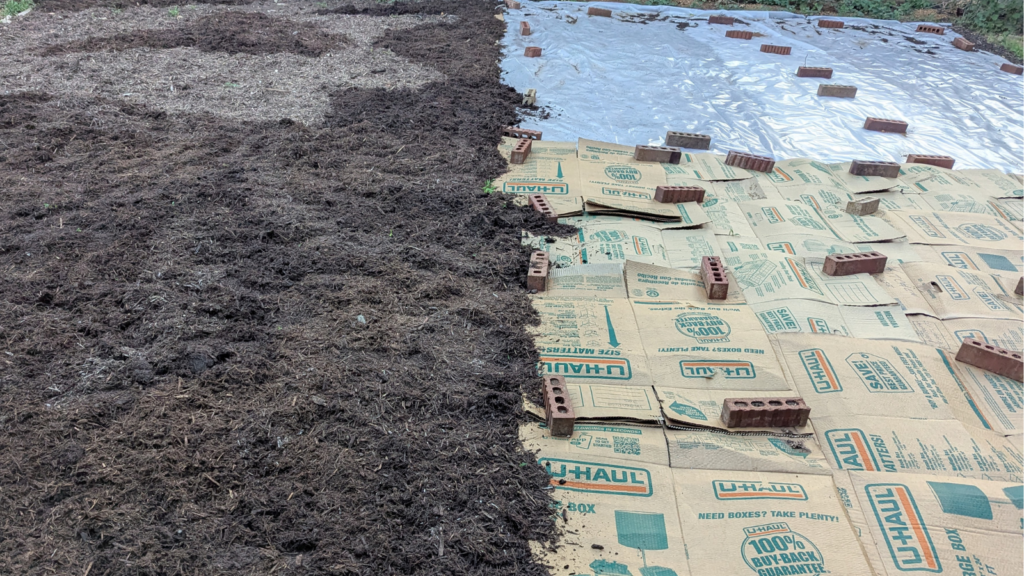
| Cardboard Only | 2 layers of overlapping cardboard + bricks | Cardboard was placed directly over the grass and secured with bricks |
| Plastic Sheeting | Clear 6-mil plastic sheeting + landscaping staples and bricks | Plastic was placed over the grass and secured around the edges |
| Control | No treatment | Grass was left uncovered and was not watered during the experiment, except for natural rainfall |
All sections were watered before the materials were applied. Everything except the plastic-covered section was watered directly after application.
After that, none of the sections received supplemental water during the experiment. The only additional moisture came from natural rainfall once in June and twice in early to mid-September.
The Results
After nearly three months of Texas summer heat, we removed the coverings and took a look at what happened underneath.
Mulch Only
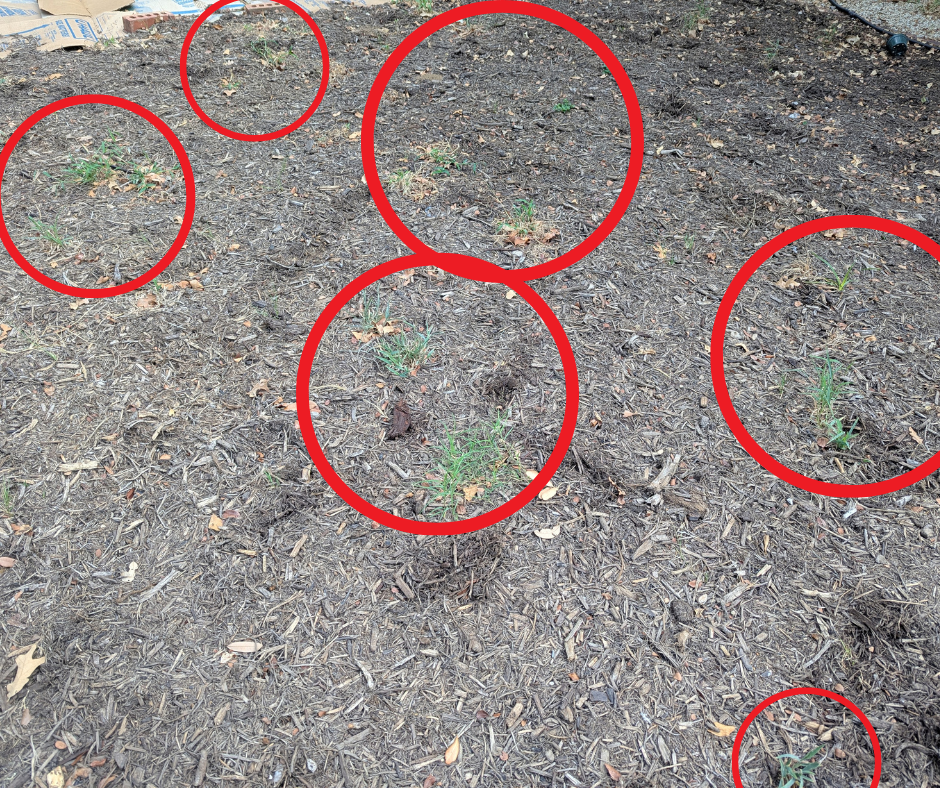
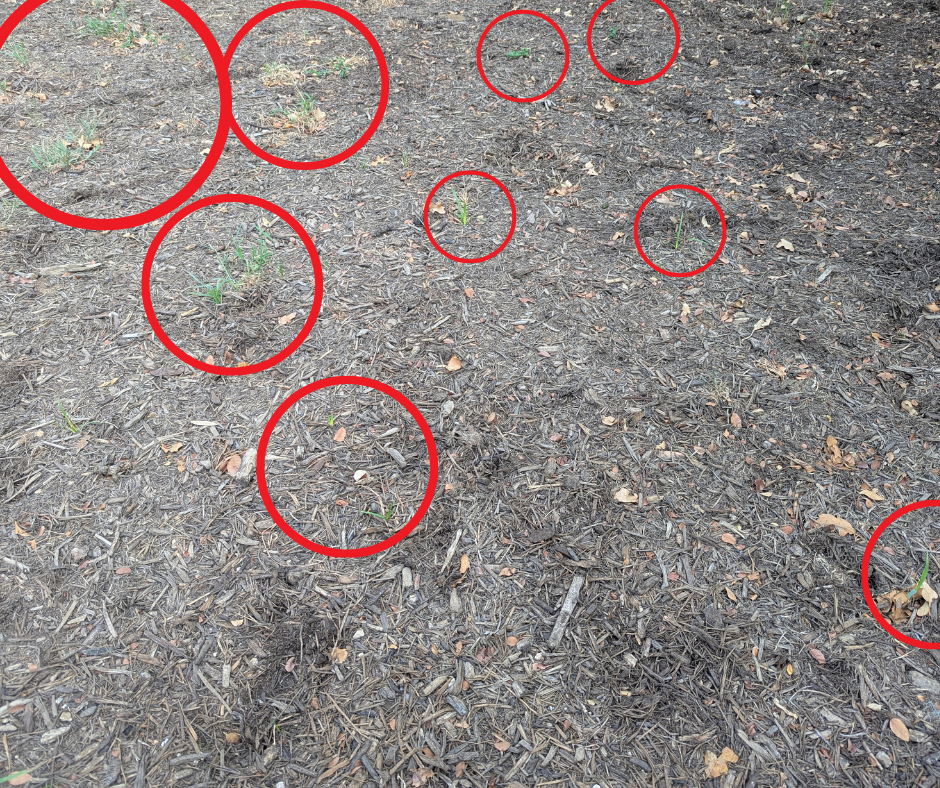
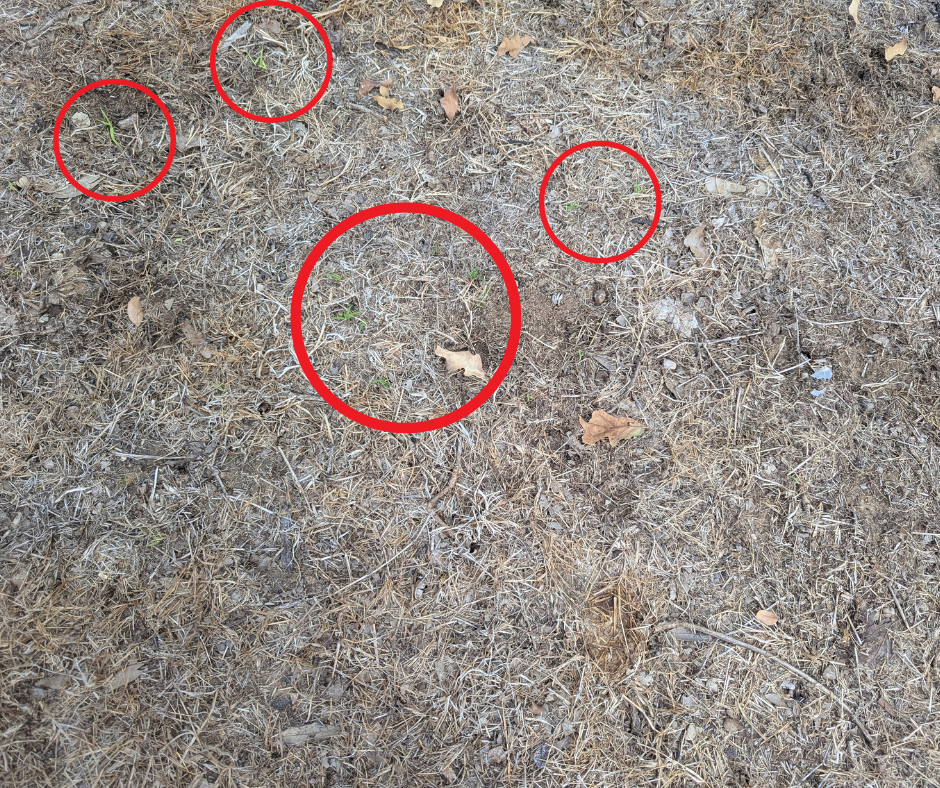
The mulch-only section had some vegetation, averaging 0.16 vegetation clumps per square foot. However, the grass didn’t appear to grow up through the mulch, rather it was growing on top of it.
Underneath the mulch, the original vegetation appeared dead. The soil looked healthy and retained a moderate amount of moisture.
What we learned:
The vegetation growing on top of the mulch was easy to remove by hand.
One benefit of this method is that the mulch can remain in place and gradually add organic matter to the soil as it breaks down.
If you’re planning to plant directly into the soil, keep in mind that you may need to move or remove some of the mulch first, depending on how deep the layer is.
Best for: Improving soil while suppressing existing vegetation.
Mulch + Cardboard
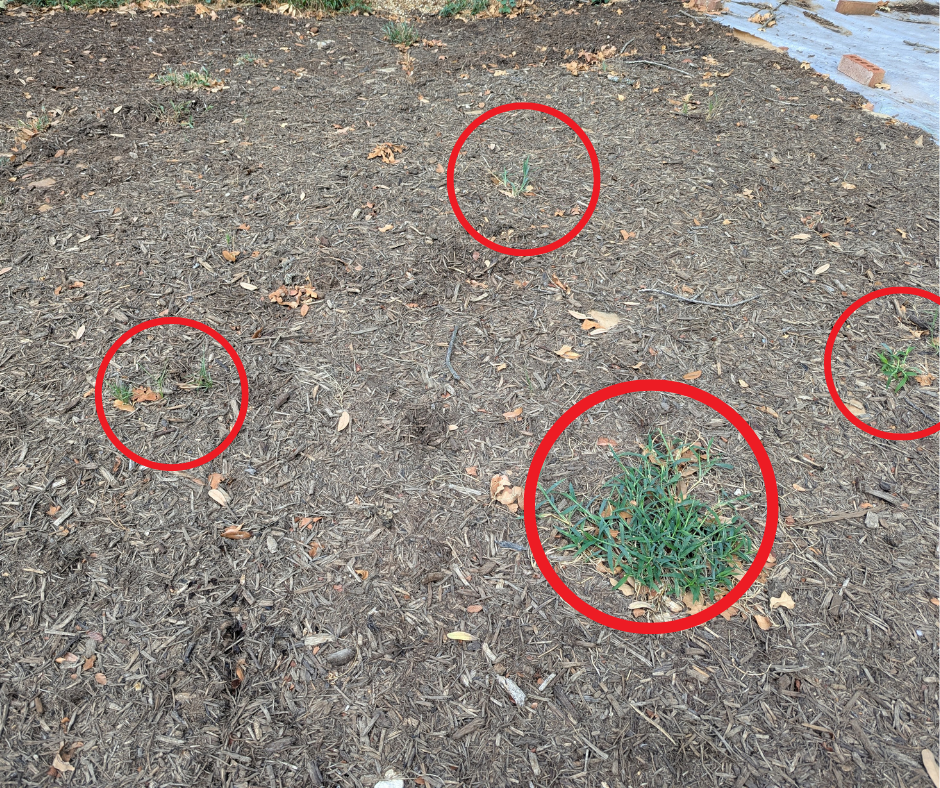
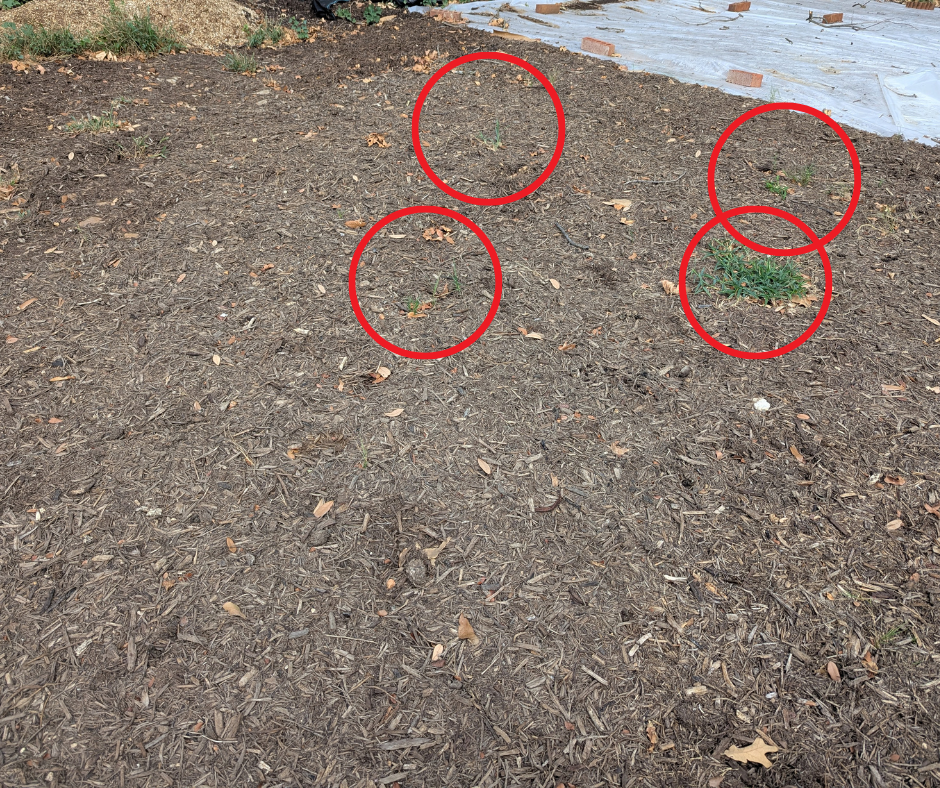
The combination of cardboard and mulch performed slightly better than mulch alone, with an average of 0.08 vegetation clumps per square foot.
Most of the vegetation underneath appeared dead. A small amount of grass grew on top of the mulch, while some vegetation managed to grow through the seams between pieces of cardboard.
The soil looked healthy and retained a moderate amount of moisture.
The cardboard showed very little breakdown over the course of the experiment. More frequent watering could potentially speed up that process.
What we learned:
Overlap your cardboard generously. Gaps and seams can give grasses an opportunity to sneak through.
This method is particularly useful if you’re planning to put a raised bed on top of the area. If you plan to plant directly into the ground, you’ll need to cut openings through the cardboard or remove it first.
Best for: Preparing an area for a raised bed while adding an organic mulch layer.
Cardboard Only
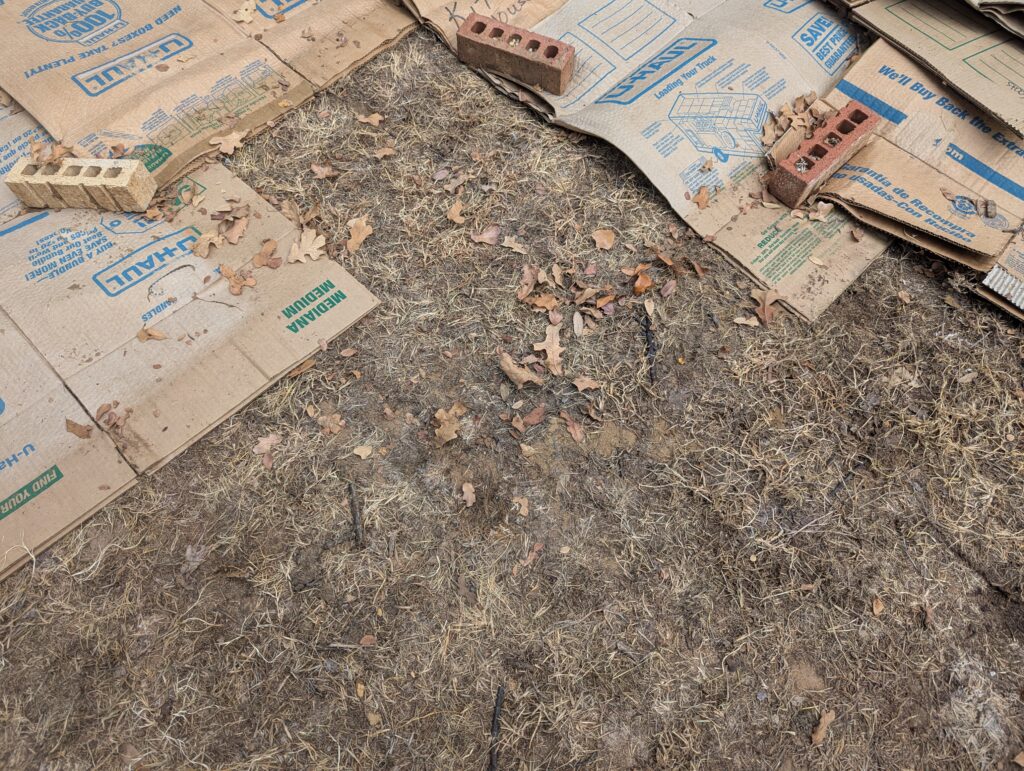
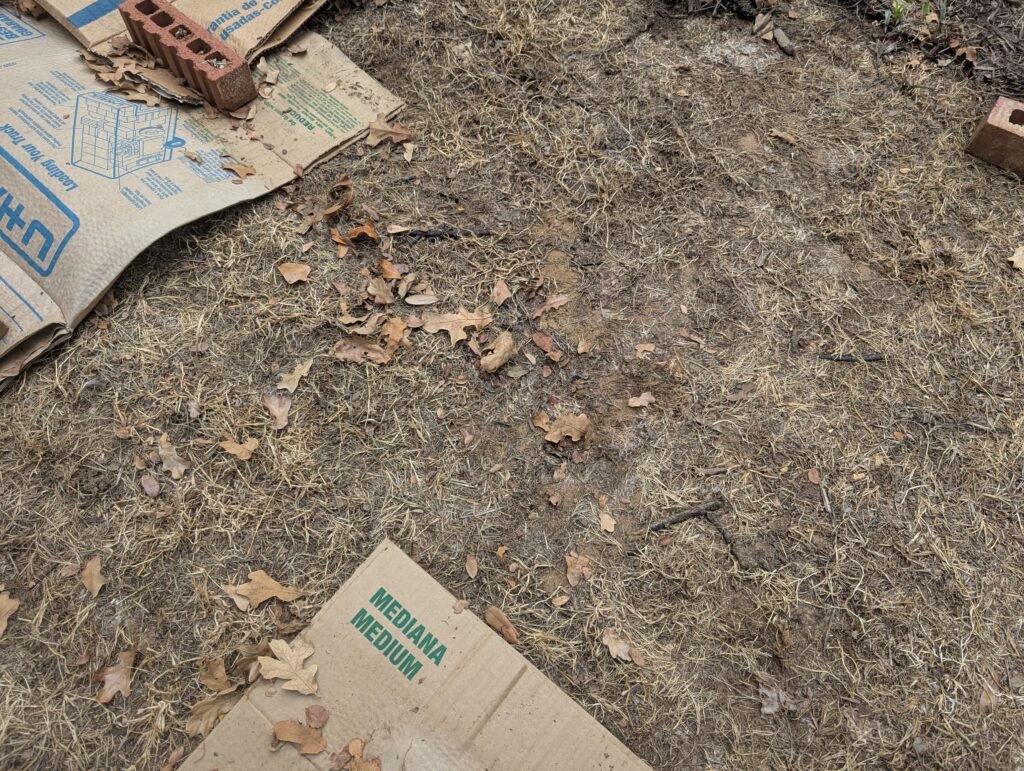
The cardboard-only section had zero live vegetation underneath the cardboard, making it the most successful method at completely eliminating existing vegetation.
However, the soil underneath was dry, hard, and did not retain much moisture. The cardboard itself showed little to no breakdown during the experiment.
What we learned:
Killing the grass is only part of the process. Before planting, this soil would need to be loosened and rehydrated. Adding compost or another source of organic matter would also be beneficial because the cardboard alone did not add much organic material to the soil during the experiment.
If planting directly into the area, the cardboard will need to be removed or holes will need to be cut for individual plants.
As with the cardboard-and-mulch method, this can be a good option for installing a raised bed. In that situation, the cardboard can remain in place underneath the bed.
How quickly cardboard breaks down can vary depending on its thickness, age, quality, and how much moisture it receives.
We also noticed some evidence of squirrels trying to get underneath the cardboard and bury seeds.
Best for: Eliminating existing vegetation, particularly when installing a raised bed afterward.
Plastic Sheeting
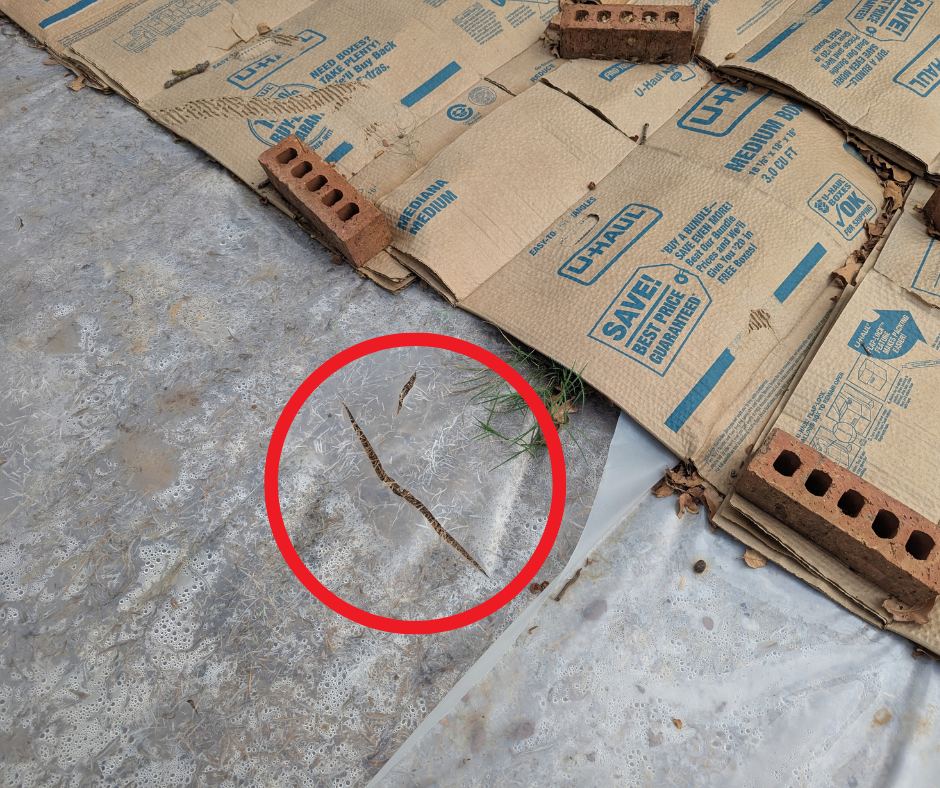
The clear plastic sheeting section had an average of just 0.05 very small vegetation clumps per square foot, with a few plants growing in from the edges.
The plastic held moisture very effectively as condensation built up underneath the sheeting throughout the experiment.
However, the plastic began tearing toward the end of the test and required patching.
What we learned:
The plastic did a good job of suppressing vegetation and retaining soil moisture, but it left some work to do before planting.
Like the cardboard-only method, the soil will need to be loosened and rehydrated before planting. Adding compost or another source of organic matter may also be beneficial because the plastic does not contribute organic matter to the soil.
The plastic must be completely removed before planting, along with any landscaping staples used to secure it. And removal can be messy once the plastic begins breaking apart, small pieces can be left behind and have to be collected.
Plastic sheeting was the easiest method to install and one of the least expensive to put into practice. However, if you’re creating a new garden bed, you’ll likely need to purchase mulch anyway, making mulch-based methods worth considering as part of the overall project.
Best for: Suppressing vegetation while retaining soil moisture with minimal installation effort.
The Control
The control section was left untreated and simply wasn’t watered during the experiment, aside from natural rainfall.
It averaged 6 vegetation clumps per square foot.
Compared with the treated sections, the difference was significant. Even during the heat of summer with little supplemental water, the untreated area maintained substantially more vegetation.
This gave us a useful baseline for comparing how much each treatment suppressed existing growth.
Conclusion
There isn’t necessarily one method that works best for every situation. Choose the method based on the final result you want:
Plastic sheeting: Best for creating a clean, bare planting area with minimal cleanup.
Cardboard only: Best when using cardboard as a temporary weed barrier or beneath raised beds.
Cardboard and mulch: Best for future pathways or raised beds where mulch will remain in place.
Mulch only: Best if you want to improve soil over time and keep a finished mulch layer after planting.
| Method | Pros | Cons |
|---|---|---|
| Mulch Only | Adds organic matter to the soil; retains moderate soil moisture; vegetation on top is easy to remove; no material to dispose of afterward | Some vegetation remained; grass can grow on top of the mulch; mulch may need to be moved before planting |
| Mulch + Cardboard | Good vegetation suppression; adds organic matter through mulch; retains moderate soil moisture; useful for raised beds | Vegetation can grow through cardboard seams; cardboard showed little breakdown; cardboard must be cut or removed for in-ground planting |
| Cardboard Only | Most effective vegetation control; no live vegetation found underneath; useful under raised beds | Soil became dry and hard; adds little organic matter; cardboard showed little breakdown; must be removed or cut for planting; squirrels disturbed some areas |
| Plastic Sheeting | Very effective vegetation suppression; retained soil moisture; condensation formed underneath; easy and inexpensive to install | Plastic began tearing; must be removed and disposed of; staples must be removed; small plastic pieces can be left behind; does not add organic matter; soil still needs preparation before planting |
Resources
Solarizing for Success – Save Tarrant Water
7 Smart Ways to Replace Dead Turf – Save Tarrant Water
Turf Alternatives Part 1: Reconsider Your Lawn – Save Tarrant Water
Turf Alternatives Part 2: Making the Switch – Save Tarrant Water
Soil Solarization | Publications | AgriLife Learn
Sustainable Turfgrass Management – AgriLife
Simple steps to a solar-powered garden reboot – Garden Style San Antonio